
5 Min. ReadAs landscape companies grow, many eventually reach the same crossroads:
Should we hire an in-house designer—or outsource design work to a dedicated partner like SCAPES?
At first glance, bringing design in-house sounds like the natural next step. Having a designer under your roof feels efficient, collaborative, and scalable. But when contractors fully account for salary, benefits, software, downtime, recruiting, and seasonal workload swings, the economics often tell a very different story.
For many landscape contractors, outsourcing design is not just the lower-risk option—it is often the more profitable and operationally flexible model. This becomes especially true during the busiest parts of the season, when speed and capacity directly affect revenue generation.
In this guide, we’ll break down:
The true cost of an in-house landscape designer
The hidden overhead most contractors underestimate
Why seasonal fluctuations make internal staffing risky
How outsourced design improves scalability and turnaround time
A real-world cost comparison using actual project numbers
The True Cost of an In-House Landscape Designer
When most contractors think about hiring a designer, they focus primarily on salary.
But salary is only one part of the equation.
According to national compensation data, landscape designers commonly earn between $65,000–$75,000 annually, while more experienced designers and landscape architects often command significantly more. Once benefits, taxes, software, equipment, office space, PTO, and recruiting costs are included, the real annual employer cost rises quickly.
For many contractors, the actual yearly investment for a qualified in-house designer lands somewhere between $100,000 and $130,000+ per year.
A realistic annual cost breakdown often looks something like this:
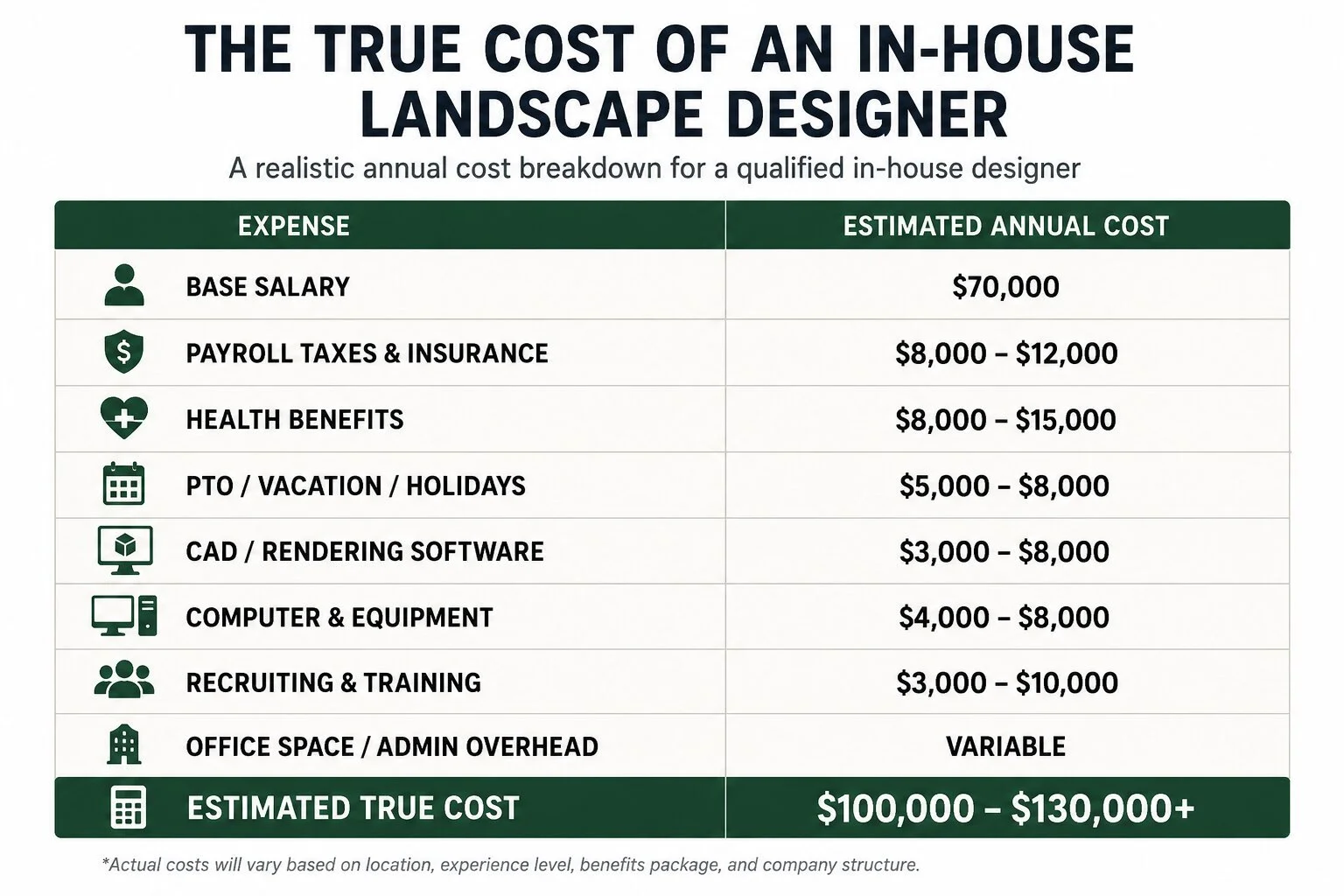
And importantly, those costs continue regardless of workload fluctuations. Whether the company has a full pipeline of design work—or a slow winter month with very little production demand—the payroll burden remains fixed.
That creates one of the biggest financial challenges with internal staffing in the landscape industry.
The Seasonal Overhead Problem
Landscape construction is inherently seasonal in many regions. Spring and early summer often create overwhelming demand, while late fall and winter can slow dramatically. But a full-time in-house designer still represents a fixed annual overhead expense that exists every week of the year.
This means contractors are often paying full salary, benefits, software subscriptions, and overhead costs even during periods when design demand may temporarily drop.
Outsourcing changes that equation completely.
Instead of carrying a fixed six-figure overhead expense, contractors gain the ability to scale design costs based on actual workload. When business surges, capacity can increase. When things slow down, overhead decreases automatically.
That flexibility creates a much healthier operational model for many growing landscape companies.
The Hidden Limitation of One Internal Designer
Another issue contractors frequently encounter is production bottlenecks. Most companies hiring internally begin with a single designer. While that may initially feel sufficient, it quickly creates a hard production ceiling during busy season.
One person can only handle so much work. As leads increase in spring, internal teams often become overwhelmed by revisions, 3D renderings, construction plans, presentations, site measurements, and client communication. The result is slower turnaround times and delayed proposals. And in competitive markets, speed matters.
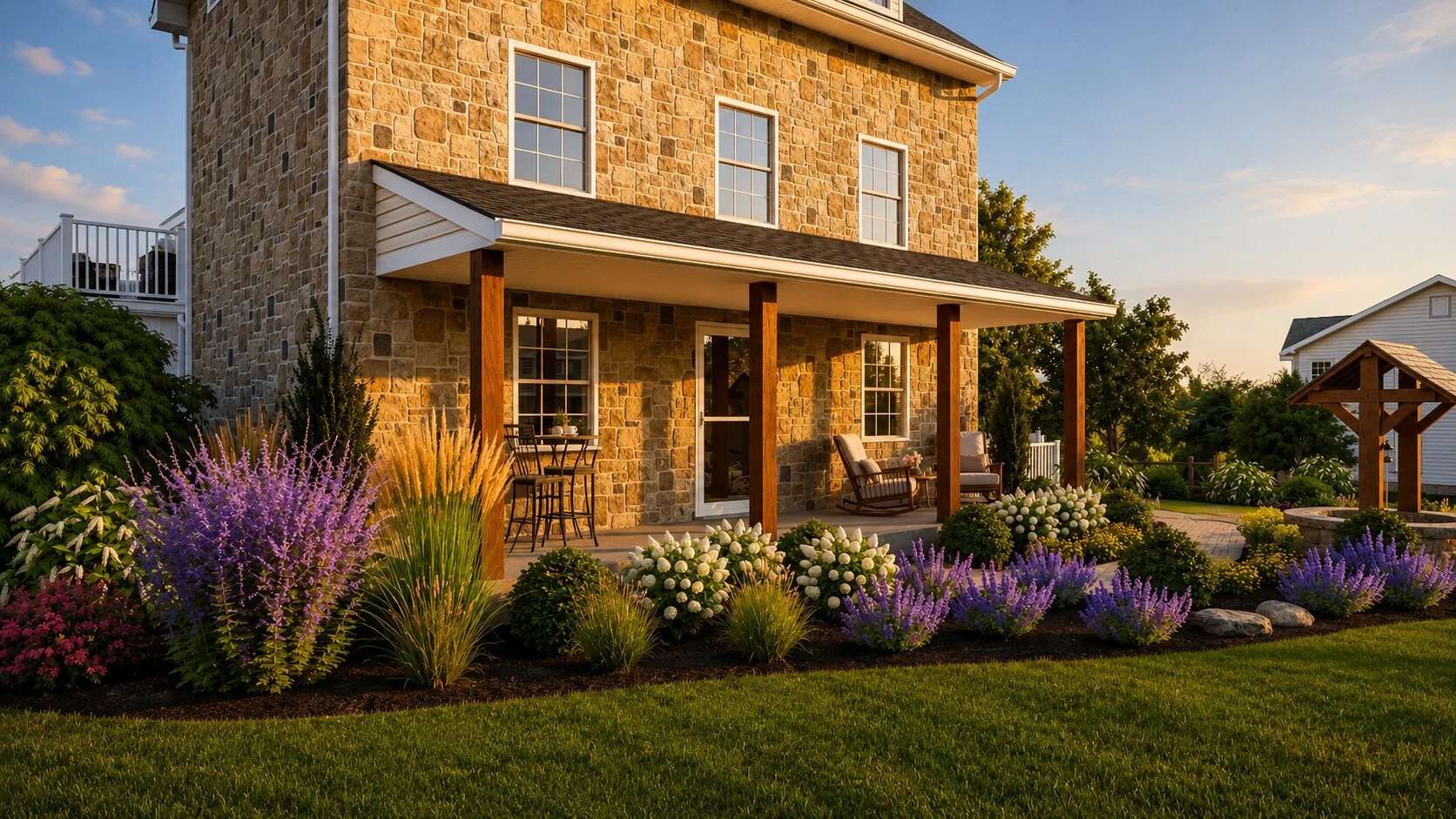
Homeowners regularly contact multiple contractors simultaneously. The company that responds first with a professional, polished design presentation often gains a major advantage in winning the project.
Waiting several weeks for internal design availability can cost contractors real revenue opportunities.
The Case Study: In-House Designer vs. SCAPES
Let’s look at a simplified real-world comparison. Assume a contractor hires one in-house landscape designer with a total true annual employer cost of $110,000. Now assume that designer completes approximately 52 projects per year—roughly one project per week throughout the entire year.
That means the effective design cost per project becomes:
$110,000 / 52 projects = $2,115
That equals approximately $2,115 per design project before accounting for inefficiencies, downtime, revisions, management overhead, or slow-season underutilization.
Now compare that to outsourcing through SCAPES. With an average project cost of approximately $892 per design, the annual cost for the same 52 projects would be:
$892 × 52 projects = $46,384
That equals approximately $46,384 annually.
The difference between the two models becomes significant:
$110,000 - $46,384 = 63,616
That represents a potential annual savings of roughly $63,616 per year.
And importantly, that comparison still does not account for:
Recruiting costs
Employee turnover risk
Seasonal downtime
Capacity limitations
Vacation schedules
Training time
Management oversight
For many contractors, the financial difference is substantial enough to reinvest back into sales growth, marketing, equipment, additional crews, or operational expansion.
Faster Turnaround Times Create Competitive Advantages
The financial savings are only part of the equation. One of the biggest operational advantages of outsourcing to a dedicated production-focused design partner like SCAPES is scalable capacity. Unlike relying on a single internal employee, SCAPES is built around handling fluctuating production volume.
That means contractors are not limited by:
One person’s workload
One vacation schedule
One production speed
One hiring bottleneck
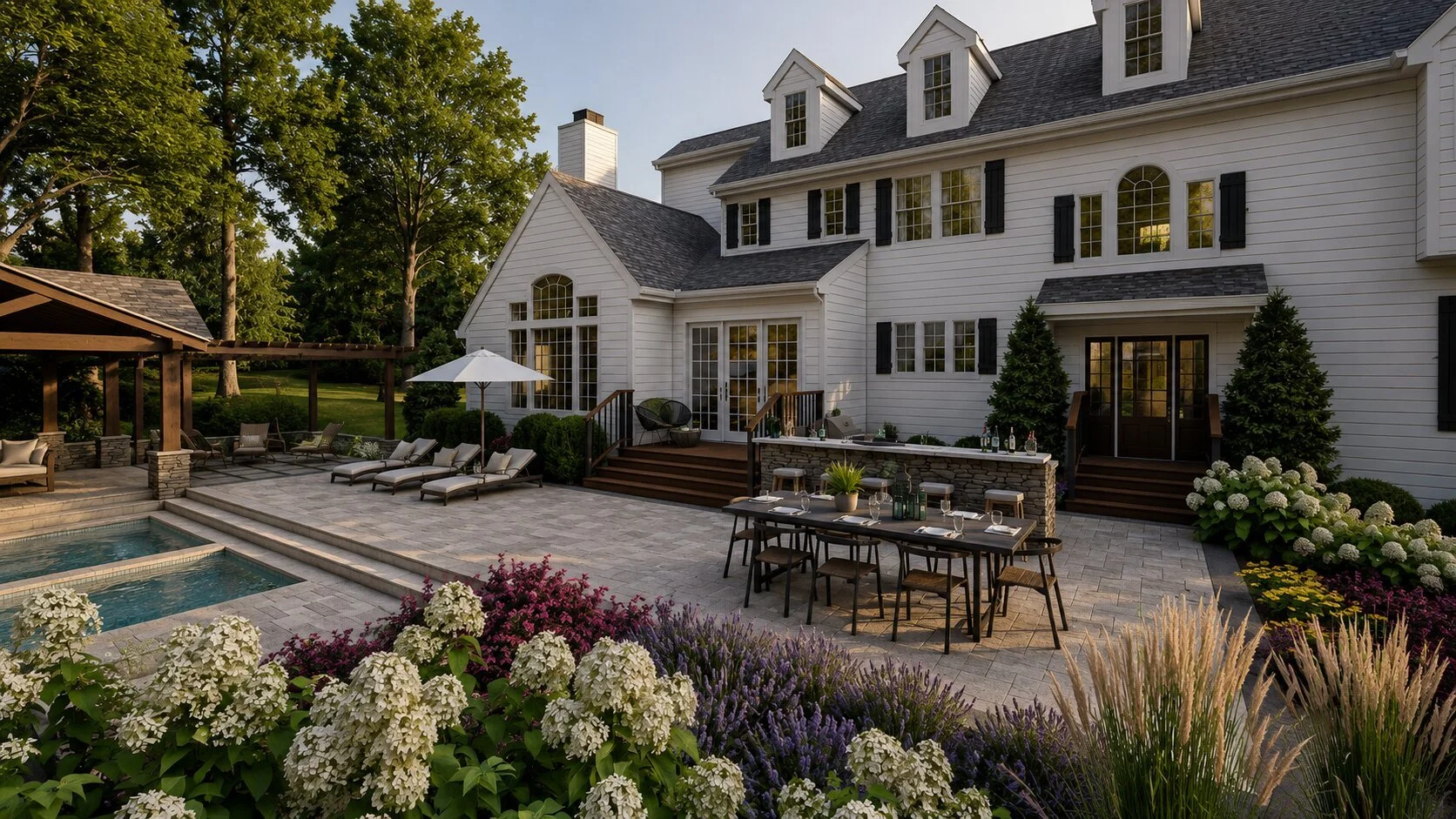
Instead, contractors gain access to flexible production support capable of scaling during the busiest parts of the season. This often leads to faster proposal turnaround, more consistent delivery timelines, reduced backlog pressure, and improved client response times.
In many cases, improved turnaround speed alone can increase close rates and overall annual revenue.
Why More Contractors Are Choosing Flexible Design Models
Many growing landscape companies are realizing they do not necessarily need a full internal design department to compete at a high level.
Instead, hybrid and outsourced production models are becoming increasingly attractive because they reduce fixed overhead while increasing scalability.
Rather than asking:
“How many designers can we afford to hire?”
The better question becomes:
“How much design capacity do we need right now?”
That shift creates a far more agile business model.
It allows contractors to scale intelligently without carrying unnecessary overhead during slower periods.
The Growing Talent Shortage in Landscape Design
Another factor that many contractors are beginning to experience firsthand is the shrinking supply of qualified landscape designers entering the industry.
For years, landscape construction demand has continued to grow as homeowners invest more heavily into outdoor living spaces, pools, patios, outdoor kitchens, and full-property master planning. At the same time, the number of students pursuing landscape design and landscape architecture degrees has struggled to keep pace. This is something we experienced personally while studying landscape design ourselves.
Many college programs that once produced larger graduating classes are now seeing:
Lower enrollment numbers
Reduced program visibility
Fewer students entering the profession
Increased competition for qualified graduates
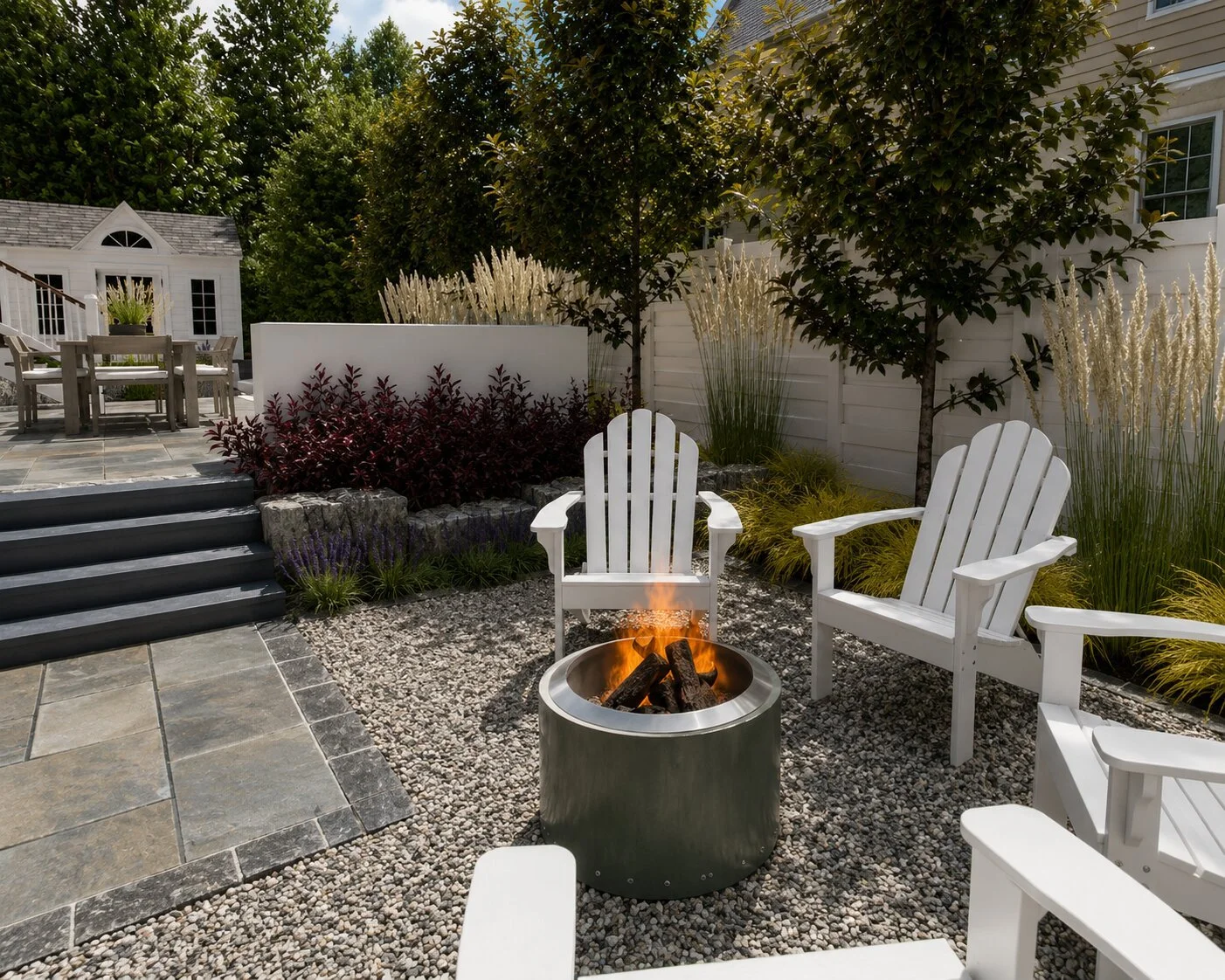
Meanwhile, homeowner expectations continue rising rapidly. Today’s clients increasingly expect:
Luxury-level design experiences
That growing gap between supply and demand is creating major hiring challenges throughout the landscape industry. For contractors trying to build internal design departments, this creates several long-term concerns:
Qualified designers are becoming harder to find
Recruiting timelines are getting longer
Salary expectations continue rising
Competition between firms for talent is increasing
Employee retention becomes more difficult
And because experienced designers are limited in supply, many companies end up competing for the exact same small talent pool. This creates additional financial pressure beyond salary alone. In many cases, contractors are not simply hiring a designer—they are entering an increasingly competitive labor market where recruiting and retention become ongoing operational challenges.
Outsourcing design helps eliminate much of that risk. Rather than depending entirely on recruiting, training, and retaining internal talent in a tightening labor market, contractors gain access to an established production team that already has the systems, experience, and scalability in place.
As demand for professional landscape design continues growing nationwide, the companies that remain flexible and scalable will have a significant advantage over those struggling to build and maintain internal staffing capacity.
Recap
Hiring an in-house landscape designer can absolutely make sense for certain companies—especially very large firms with constant year-round design volume.
But for many landscape contractors, outsourcing to a dedicated design partner like SCAPES creates a more flexible, scalable, and financially efficient model.
When the numbers are fully analyzed, outsourcing often provides:
Lower annual overhead
Better seasonal flexibility
Faster turnaround times
Greater production scalability
Reduced hiring risk
Lower per-project cost
And perhaps most importantly, it allows contractors to focus internal resources on what drives growth most: sales, operations, and executing profitable projects.
In today’s market, speed, flexibility, and efficiency matter more than ever. For many contractors, outsourced design is no longer just a convenience—it is a strategic advantage.
About the Author
With a diverse background as an owner of both a landscape design/build business and landscape maintenance operation as well as a formal education in Landscape Design from Penn State, Kevin now spends his days helping SCAPES lead the charge in the internet landscape design space. The classic kid-mowing-lawns story turned into a passion for the landscape profession for Kevin, and you may even hear him tell you that landscaping is about all he is good for! Have a question about something you just read? Reach out to Kevin directly at kevin@scapesdesigns.com and he will undoubtedly prove how serious SCAPES is about delivering a delightfully personal experience.
