
10 Min. ReadFor decades, the landscape industry has normalized one word that quietly undermines professionalism, profitability, and client trust:
Estimate.
At first glance, the term seems harmless. Contractors use it every day. Homeowners expect to hear it. Sales teams default to it without much thought.
But the reality is this:
The word “estimate” implies uncertainty.
And uncertainty is one of the biggest reasons projects experience:
Budget overruns
Client frustration
Scope confusion
Change orders
Delays
Lost trust
Reduced profit margins
As the outdoor living industry continues to evolve into a more sophisticated design-build profession, it’s time for contractors to rethink the language they use—and more importantly, the process behind it.
The industry should stop selling “estimates” and start delivering professional proposals backed by accurate design development.
Because when projects are properly designed, detailed, and planned, pricing should not be a moving target.
The Problem With the Word “Estimate”
By definition, an estimate is:
“An approximate calculation or judgment of value, number, quantity, or extent.”
That definition alone creates a problem.
Homeowners hear the word estimate and immediately assume:
The price may change later
The contractor is guessing
Important items may not yet be included
Additional costs are likely coming
The contractor does not fully understand the project yet
Unfortunately, in many cases, they are correct. Far too many landscape projects are sold from:
Rough sketches
Verbal conversations
Concept-only visuals
Incomplete measurements
Undefined materials
Assumptions about site conditions
Undefined allowances
The result is predictable:
The project starts at one number and ends somewhere completely different.
Estimates Protect Contractors From Commitment
There’s an uncomfortable truth many contractors avoid:
The word estimate often exists to protect the contractor—not the client.
It creates room for:
Pricing flexibility
Scope ambiguity
Margin recovery
Unplanned extras
Undefined deliverables
But modern consumers increasingly view this negatively.
A proposal communicates something very different:
“We have thoroughly planned this project and understand what it will take to complete it properly.”
That builds confidence.
And confidence closes projects.
Professional Proposals Increase Close Rates
One of the biggest misconceptions in the industry is that highly detailed proposals scare homeowners away. In reality, the opposite is often true.
Detailed proposals help justify premium pricing because they communicate:
Professionalism
Preparation
Expertise
Organization
Transparency
Reduced risk
According to research from HubSpot, buyers are significantly more likely to trust companies that demonstrate transparency and process clarity throughout the sales experience.
Landscape clients are no different.
When homeowners feel confident that:
The contractor fully understands the project
Costs are clearly defined
Scope is documented
Surprises are minimized
they are far more likely to move forward.
Change Orders Should Be the Exception — Not the Business Model
To be clear:
Not every change order is avoidable.
Legitimate change orders happen when:
Homeowners change scope
Hidden underground conditions are discovered
Municipal requirements change
Structural conditions are uncovered
Material availability changes unexpectedly
But many landscape change orders stem from poor planning—not unavoidable conditions.
And homeowners can tell the difference.
The best contractors today are actively reducing change orders through:
Better surveying
Better site documentation
Better 3D planning
Better construction drawings
Better material coordination
Better client communication
That process starts before the first shovel hits the ground.
Why Estimates Create More Change Orders
The construction industry has long struggled with cost overruns caused by incomplete project documentation.
According to research published by the Project Management Institute, poor project planning and scope definition remain among the leading causes of budget overruns and project failure.
Similarly, studies from the Construction Industry Institute have repeatedly shown that better pre-construction planning and documentation significantly improve cost accuracy and reduce rework.
The same principles apply directly to landscape construction.
When projects are sold from vague “estimates,” contractors often fail to fully account for:
Drainage requirements
Elevation changes
Retaining wall engineering
Lighting infrastructure
Material transitions
Access limitations
Utility conflicts
Existing site conditions
Plant quantities and spacing
Pool and hardscape coordination
Structural requirements
Equipment access and staging
These are not “surprises.”
They are planning failures.
And homeowners increasingly recognize the difference.
The Real Issue Isn’t Pricing — It’s Incomplete Design
Many contractors assume inaccurate pricing is simply part of the business.
It isn’t.
The real issue is incomplete project development.
A true proposal requires:
Defined scope
Accurate measurements
Material selections
Site planning
Elevation understanding
Construction detailing
Product specifications
Labor planning
Equipment considerations
Clear client expectations
In other words:
A professional proposal requires professional design.
This is exactly why design-build firms consistently outperform contractors who rely on quick “ballpark estimates.”
Good Design Eliminates Guesswork
Professional landscape design is not just about pretty renderings.
It is a pre-construction planning tool.
An effective design process should identify nearly every major project component before construction begins.
That includes:
Hardscape Quantities
Accurate patios, walkways, coping, wall, and stair measurements reduce material shortages and labor miscalculations.
Grading & Drainage
Proper planning helps prevent costly mid-project drainage fixes and elevation conflicts.
Lighting Infrastructure
Low-voltage lighting layouts, transformer locations, wire routing, and fixture counts can all be accounted for before installation.
Construction Sequencing
Well-developed plans help contractors phase work more efficiently and reduce costly downtime.
Material Coordination
Defined material selections eliminate confusion and improve purchasing accuracy.
Client Expectations
Visual plans dramatically reduce misunderstandings about layout, scale, and finished appearance.
This is where the shift from “estimate” to “proposal” truly begins.
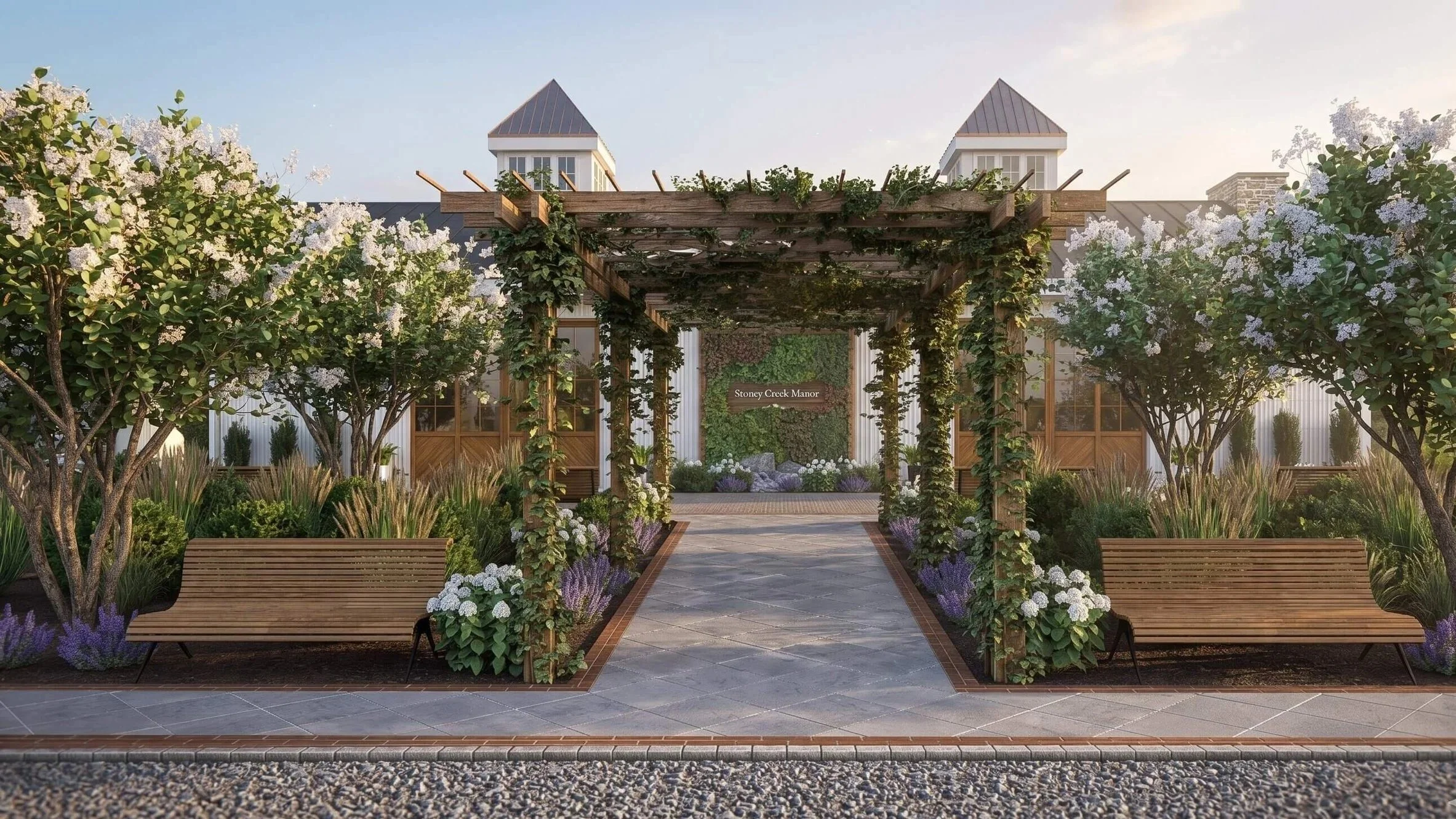
Why the Design-Build Model Is Winning
The rise of the design-build model across the outdoor living industry is not accidental. It solves one of the industry’s biggest historical problems:
Disconnect between design and construction pricing.
When designers and builders collaborate early:
Projects become more buildable
Budgets become more accurate
Scope becomes more defined
Timelines become more realistic
Material planning improves
Client confidence increases
This is why many of the fastest-growing landscape firms are investing heavily in:
Detailed project development
Presentation plans
Material takeoffs
Professional sales processes
They understand that design is no longer just marketing.
It is operational infrastructure.
The Future of Landscape Sales Is Accuracy
The outdoor living industry is becoming increasingly competitive.
Homeowners now compare:
Presentation quality
Communication speed
Design sophistication
Professionalism
Transparency
Process clarity
Contractors who continue relying on vague estimates will increasingly struggle against firms offering:
Detailed proposals
Accurate scopes
Defined deliverables
Professional visualizations
Pre-planned project execution
The companies that grow over the next decade will not be the ones who provide the fastest “ballpark estimate.”
They will be the companies that provide the clearest and most accurate project proposal.
Where SCAPES Comes In
At SCAPES, we believe professional design should do far more than create visuals.
It should help contractors:
Eliminate uncertainty
Reduce change orders
Improve pricing accuracy
Present projects professionally
Streamline construction planning
Build homeowner confidence
Increase close rates
That’s why our process focuses on more than renderings alone.
We help contractors develop projects through:
Presentation plans
Hardscape plans
Planting plans
Lighting plans
Permit plans
3D visualizations
Construction-focused project development
Because when projects are properly planned, contractors can stop selling “estimates” and start delivering professional proposals backed by real project understanding.
And that shift changes everything.
Recap
The landscape industry has evolved dramatically over the last decade.
Clients expect more.
Projects are more complex.
Competition is stronger.
Margins are tighter.
The contractors who continue operating with vague estimates and loosely defined scopes will increasingly struggle with:
Client distrust
Pricing conflicts
Margin erosion
Endless change orders
The contractors who invest in proper design, planning, and proposal development will position themselves as true professionals.
Because at the end of the day:
An estimate says:
“We think this is what it might cost.”
A proposal says:
“We’ve planned this carefully and know what it should take.”
That difference matters more than ever.
About the Author
With a diverse background as an owner of both a landscape design/build business and landscape maintenance operation as well as a formal education in Landscape Design from Penn State, Kevin now spends his days helping SCAPES lead the charge in the internet landscape design space. The classic kid-mowing-lawns story turned into a passion for the landscape profession for Kevin, and you may even hear him tell you that landscaping is about all he is good for! Have a question about something you just read? Reach out to Kevin directly at kevin@scapesdesigns.com and he will undoubtedly prove how serious SCAPES is about delivering a delightfully personal experience.
